Spectrum of Smarts: The Ultimate Science & Math Types Challenge
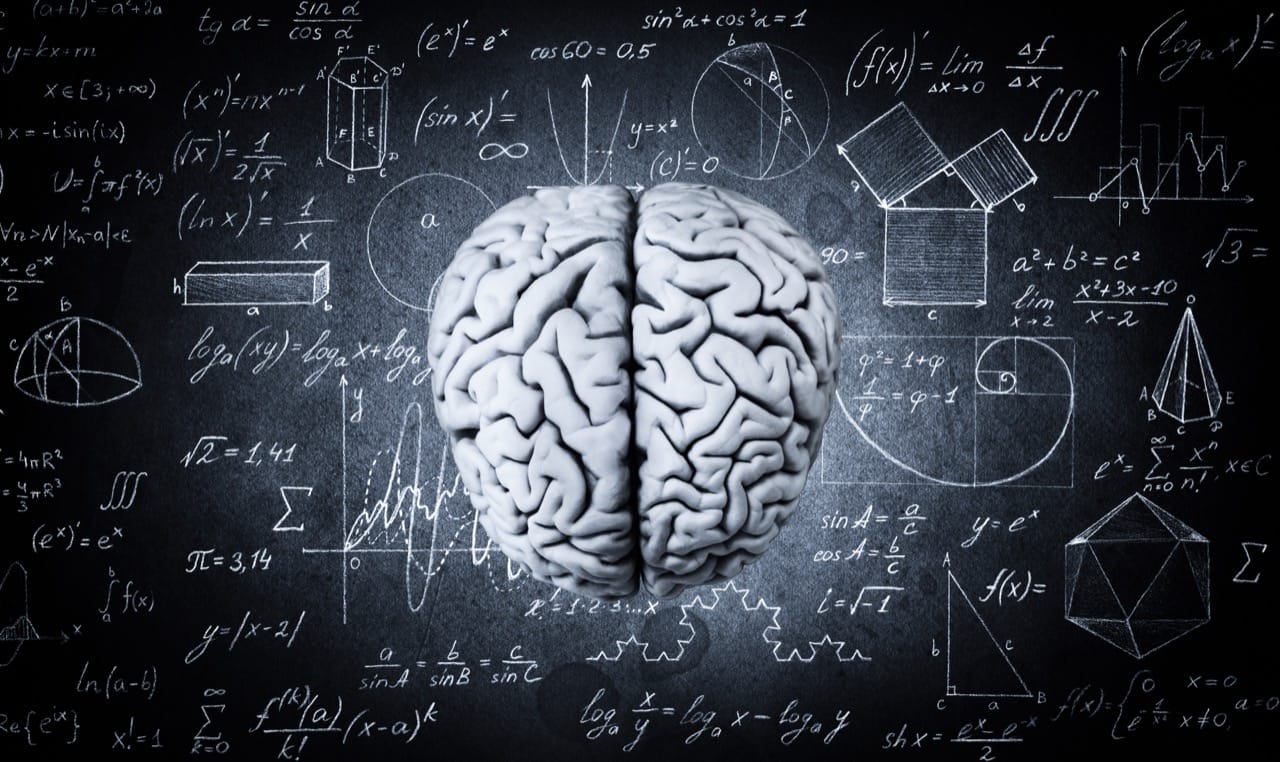
Brains get bored when facts stay in straight lines. This quiz zigzags across the many varieties and types that shape science and mathematics, from quirky particle families to exotic number systems. Expect questions that hop between disciplines, link unexpected ideas, and spotlight categories you may never have heard of. Instead of memorizing formulas, you will sort, classify, and compare: types of galaxies, flavors of quarks, species of symmetry, and more. Each question is a small puzzle about how humans organize knowledge, revealing how patterns appear in everything from chemical bonds to probability distributions. Curious minds who enjoy patterns, logic, and surprising classifications will feel right at home. Sharpen your instincts, trust your reasoning, and see how well you navigate the intricate taxonomy of the universe. Ready to test how many types your brain can track at once?
1
In computer science, which type of data structure operates on a Last In, First Out (LIFO) principle?

2
In ecology, which type of species has a disproportionately large effect on its environment relative to its abundance?

3
Which type of elementary particle is described as a force carrier in the Standard Model of particle physics?

4
Which type of galaxy is dominated by a central bulge and disk with well-defined spiral arms?

5
Which type of triangle has all three sides of different lengths and all three angles of different measures?

6
Which type of number is defined as a real number that cannot be expressed as a ratio of two integers?

7
In mathematics, which type of function satisfies the property f(x + y) = f(x) + f(y) for all x and y in its domain?

8
In chemistry, which type of bond involves the sharing of electron pairs between atoms?

9
In set theory, which type of set contains all its limit points and includes its boundary?
10
Which type of rock is formed from the cooling and solidification of molten magma or lava?

11
Which type of chemical reaction involves a single compound breaking down into two or more simpler substances?

12
In statistics, which type of probability distribution is characterized by its bell-shaped curve and defined by a mean and standard deviation?

0
out of 12
Quiz Complete!
Exploring the Spectrum of Smarts in Science and Math

Science and mathematics are often pictured as neat rows of formulas and facts, but the real excitement lies in how we organize and connect ideas. Instead of just memorizing equations, scientists and mathematicians spend a lot of time sorting, classifying, and comparing different types of things. This hidden structure is what turns scattered facts into a deeper understanding of the universe.
Take astronomy as an example. When you look at the night sky, stars and galaxies might all seem similar. Yet astronomers classify galaxies into types such as spiral, elliptical, and irregular. Spiral galaxies, like our Milky Way, have graceful arms curling around a central bulge. Elliptical galaxies are more like smooth, featureless balls or ovals of stars. Irregular galaxies do not fit either pattern and look chaotic. These categories are not just labels; they help scientists understand how galaxies form, evolve, and interact.
On a much smaller scale, particle physics does something similar with the building blocks of matter. Quarks, the tiny particles that make up protons and neutrons, come in different flavors with playful names like up, down, charm, strange, top, and bottom. These types are not flavors you can taste, but distinct varieties with different masses and electric charges. By organizing quarks into families and understanding how they combine, physicists can explain why matter is stable and how forces act at the smallest scales.
Mathematics is full of its own taxonomies. Number systems are a clear example. We start with natural numbers for counting, then extend to integers to include negatives, rational numbers for fractions, real numbers for continuous quantities like length, and complex numbers that include the mysterious square root of minus one. Each expansion solves new problems and reveals new patterns. By distinguishing between these types of numbers, mathematicians can choose the right tools for each situation, from balancing a budget to describing waves and electrical circuits.
Symmetry is another powerful idea that cuts across many fields. In math and physics, symmetry means that something stays the same when you transform it, for example by rotating, reflecting, or shifting it. There are many species of symmetry: rotational symmetry in a snowflake, mirror symmetry in a butterfly, and translational symmetry in a repeating wallpaper pattern. Classifying these symmetries helps us understand crystal structures, conservation laws in physics, and even the design of molecules in chemistry.
Probability distributions provide yet another way to organize knowledge. Instead of just asking whether something will happen, probability asks how likely different outcomes are. There are many types of distributions, such as the bell shaped normal distribution, the skewed exponential distribution, and the flat uniform distribution. Each type captures a different pattern of randomness, from test scores clustering around an average to the timing of radioactive decay.
When you explore the spectrum of types in science and math, you are really exploring how humans find order in complexity. By learning to recognize categories, relationships, and patterns, you train your brain to move beyond isolated facts. You begin to see connections between galaxies and quarks, between number systems and symmetries, between chemical bonds and probability. That is where curiosity thrives: in the zigzag paths that link ideas across the intricate taxonomy of the universe.