Capybara Chronicles: The Chill Giants of the Wetlands
Capybaras might look like oversized guinea pigs, but their story is far more surprising than their adorable faces suggest. This trivia quiz explores the wonderfully weird world of the largest rodents on Earth, from their semi-aquatic superpowers to their famously relaxed attitude. Along the way, you will uncover how capybaras communicate, why so many other animals love hanging out with them, and what makes their daily routine so unique. Expect questions that test both common knowledge and lesser-known facts, perfect for animal fans who enjoy quirky details. Whether you are an expert on South American wildlife or just curious about these laid-back lawn potatoes, this quiz will challenge what you think you know. Get ready to sharpen your animal IQ, discover some unexpected capybara secrets, and maybe even find your new favorite creature from the animal kingdom.
1
Which of the following best describes a famous behavior of capybaras related to their digestion?
2
What is a capybara primarily known for in the animal kingdom?
3
Capybaras are highly social animals. How do they usually organize themselves in the wild?

4
What is the primary component of a capybara’s natural diet?
5
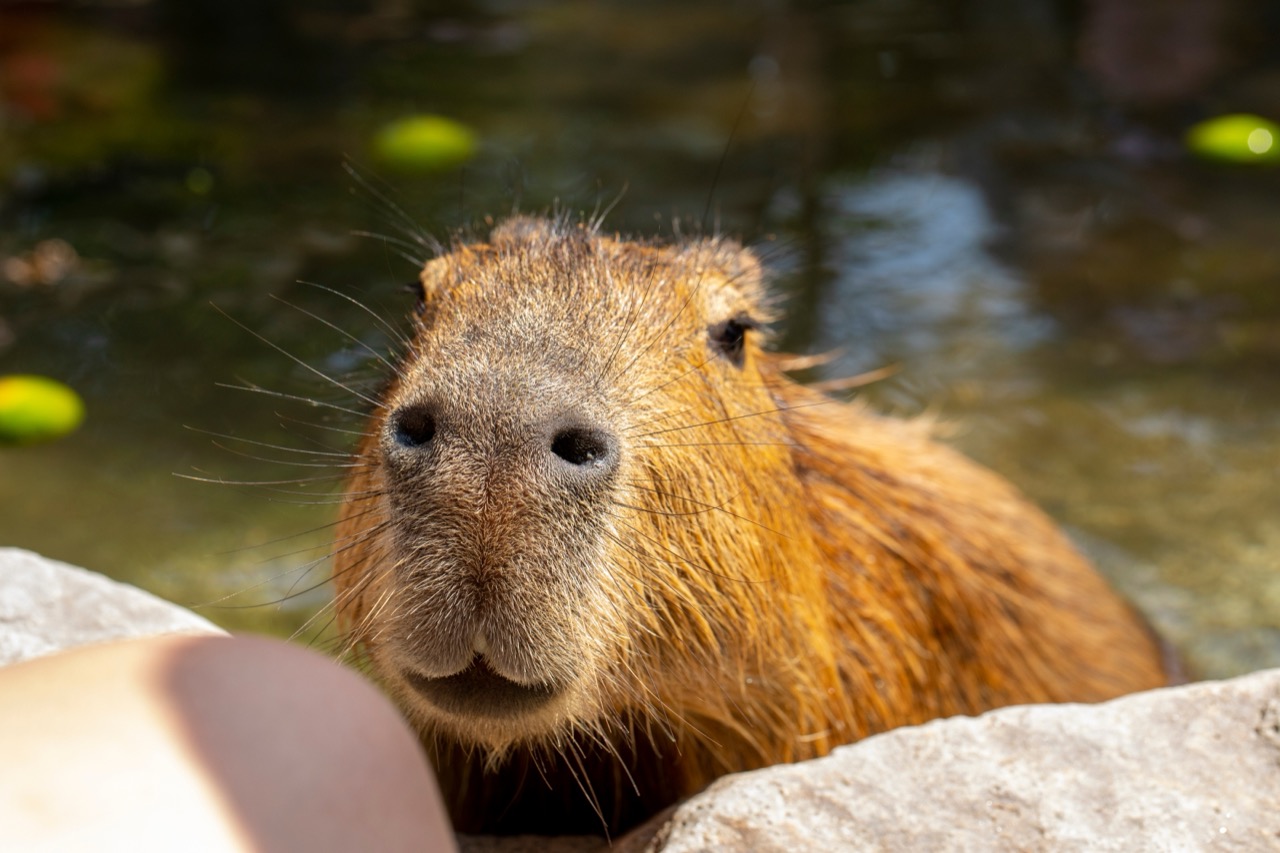
Capybaras are often seen peacefully sharing space with many other animals. Which trait helps explain this?
6
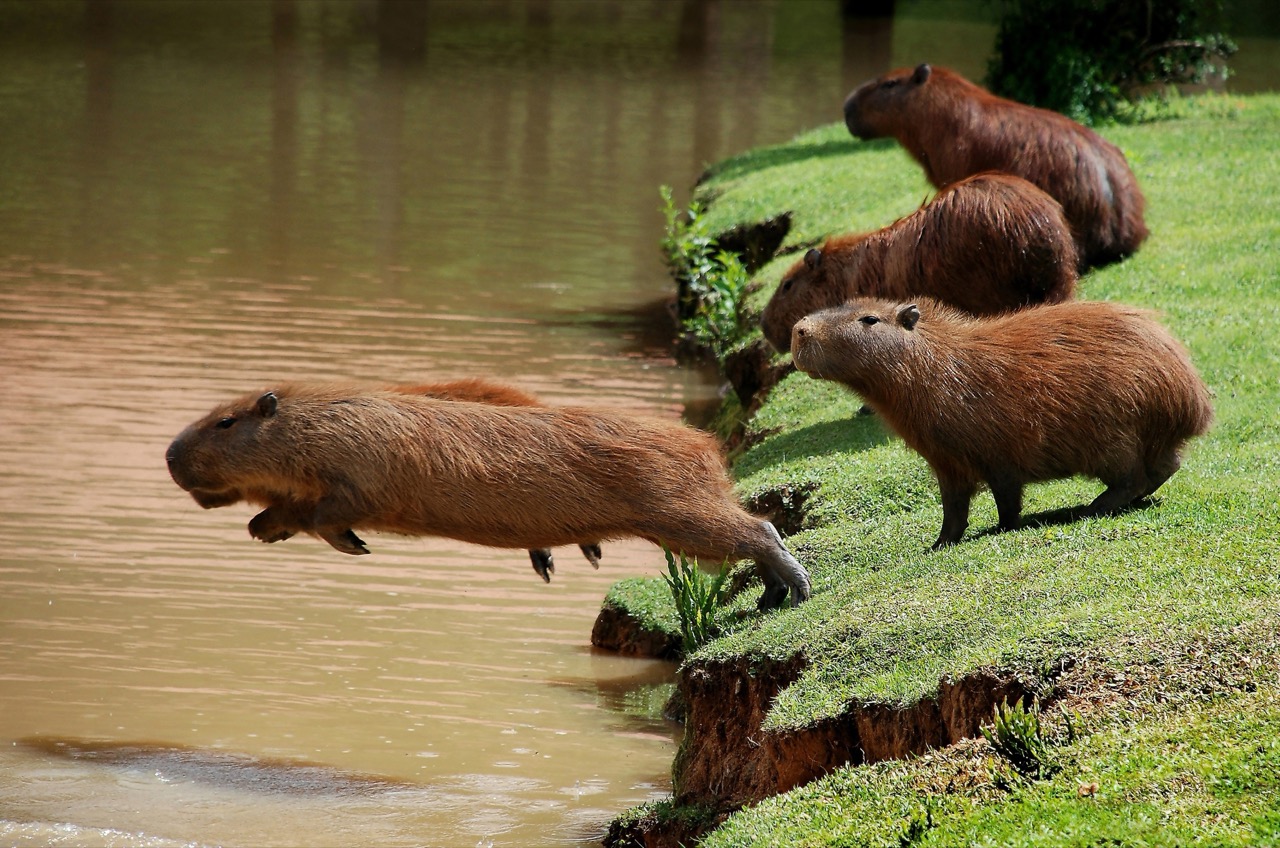
Which adaptation helps capybaras stay comfortable in hot climates?
7
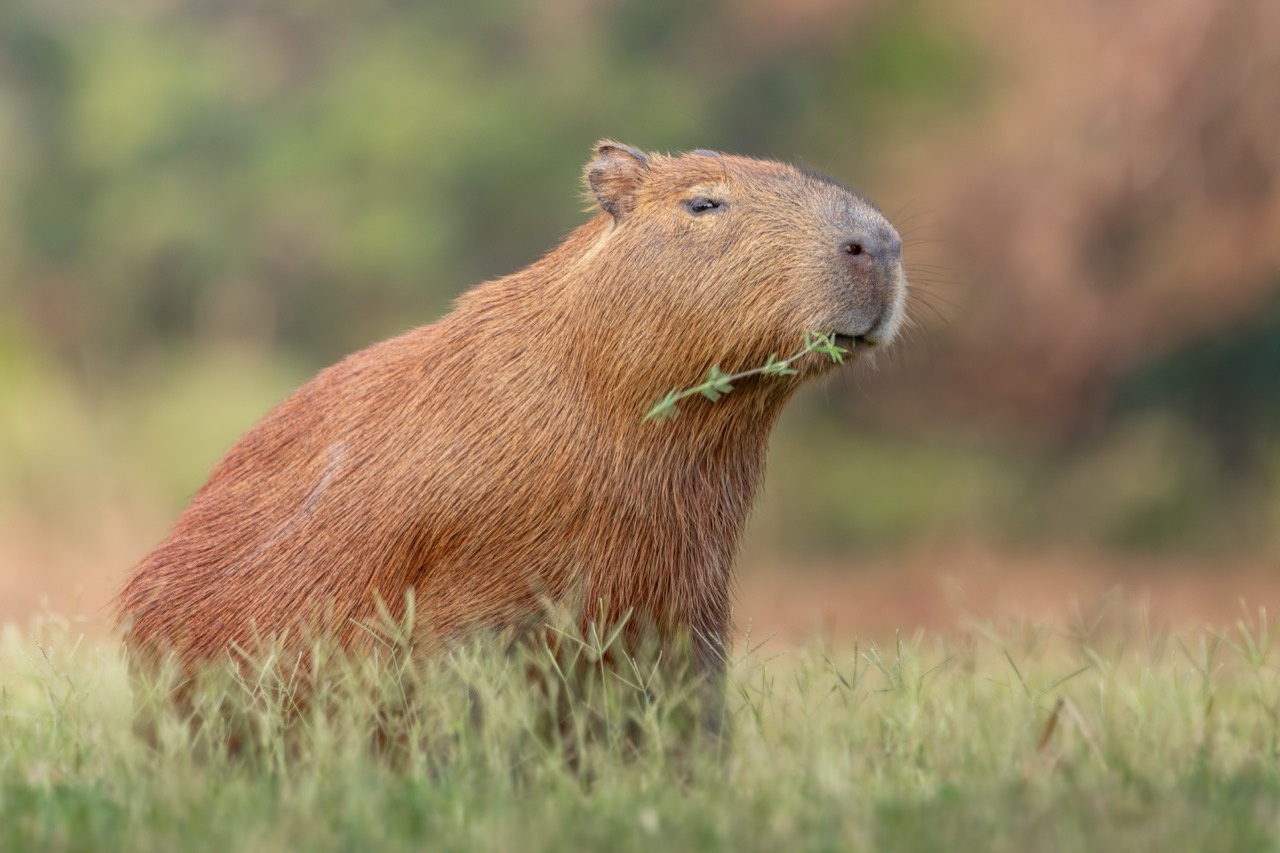
In which type of habitat are capybaras most commonly found in the wild?
8
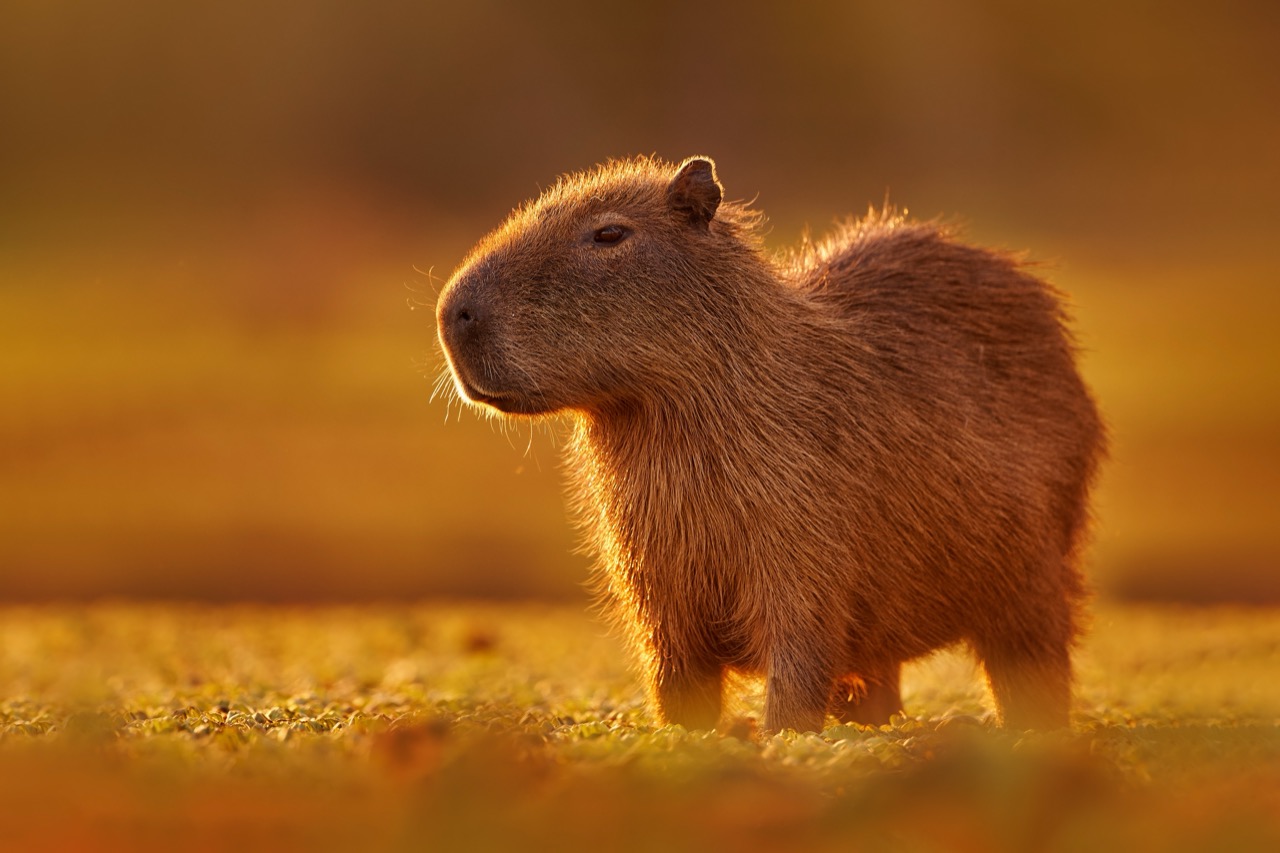
How do capybaras most commonly communicate within their groups?

9
Which continent is home to wild capybara populations?
10
What is a key reason capybaras are such strong swimmers?
0
out of 10
Quiz Complete!
Capybara Chronicles: The Chill Giants of the Wetlands
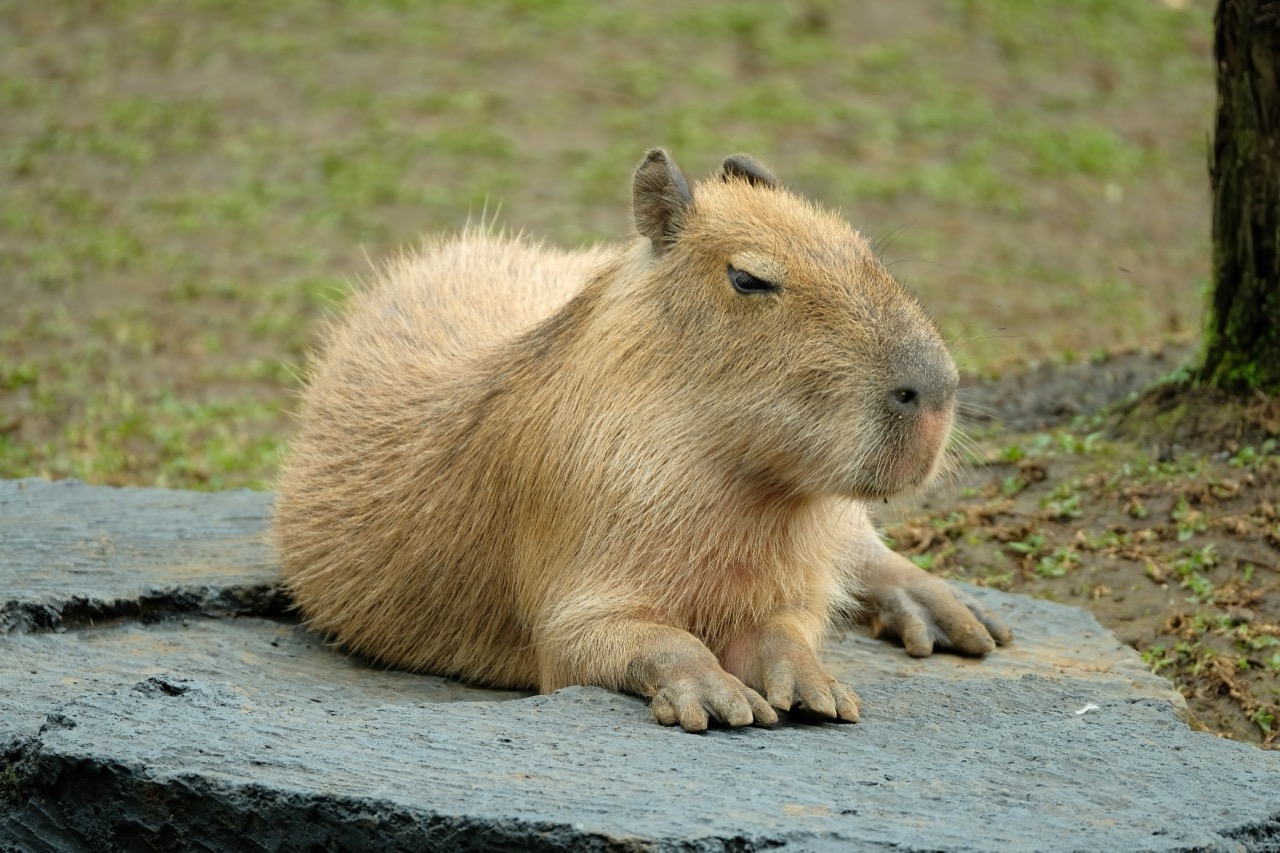
Capybaras are often described as giant guinea pigs, and at first glance that comparison makes sense. They share the same rounded bodies, blunt snouts, and bright, curious eyes. But behind their cute appearance is a remarkable animal with a lifestyle and set of abilities that surprise many people.
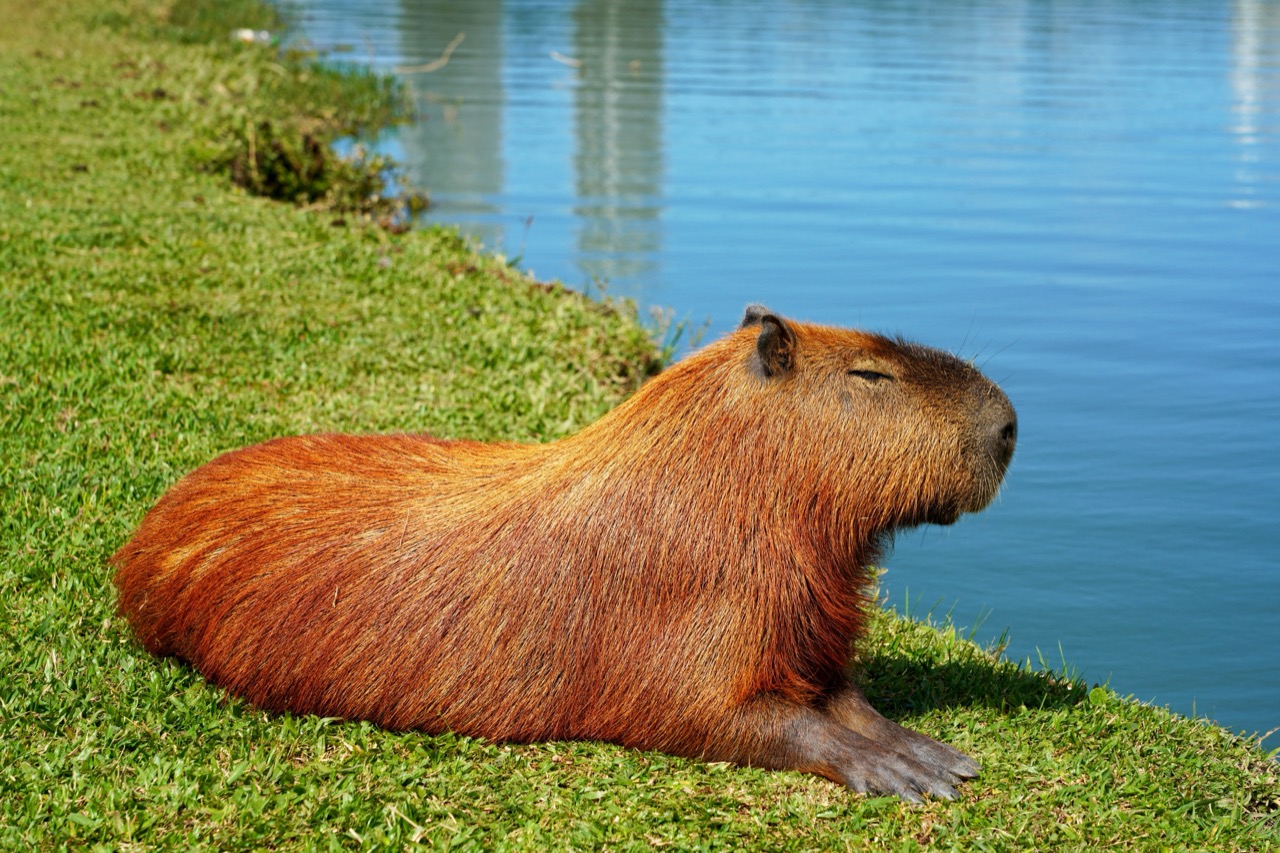
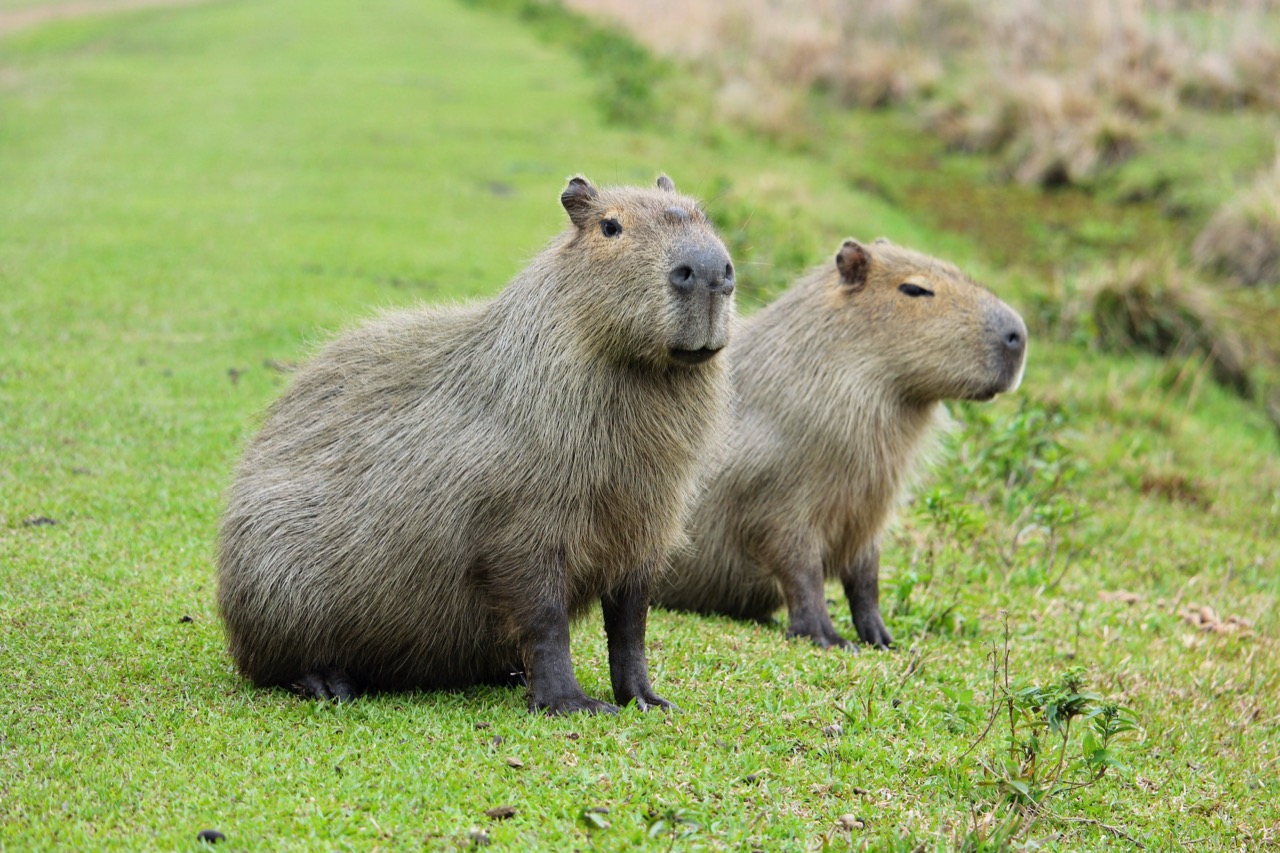
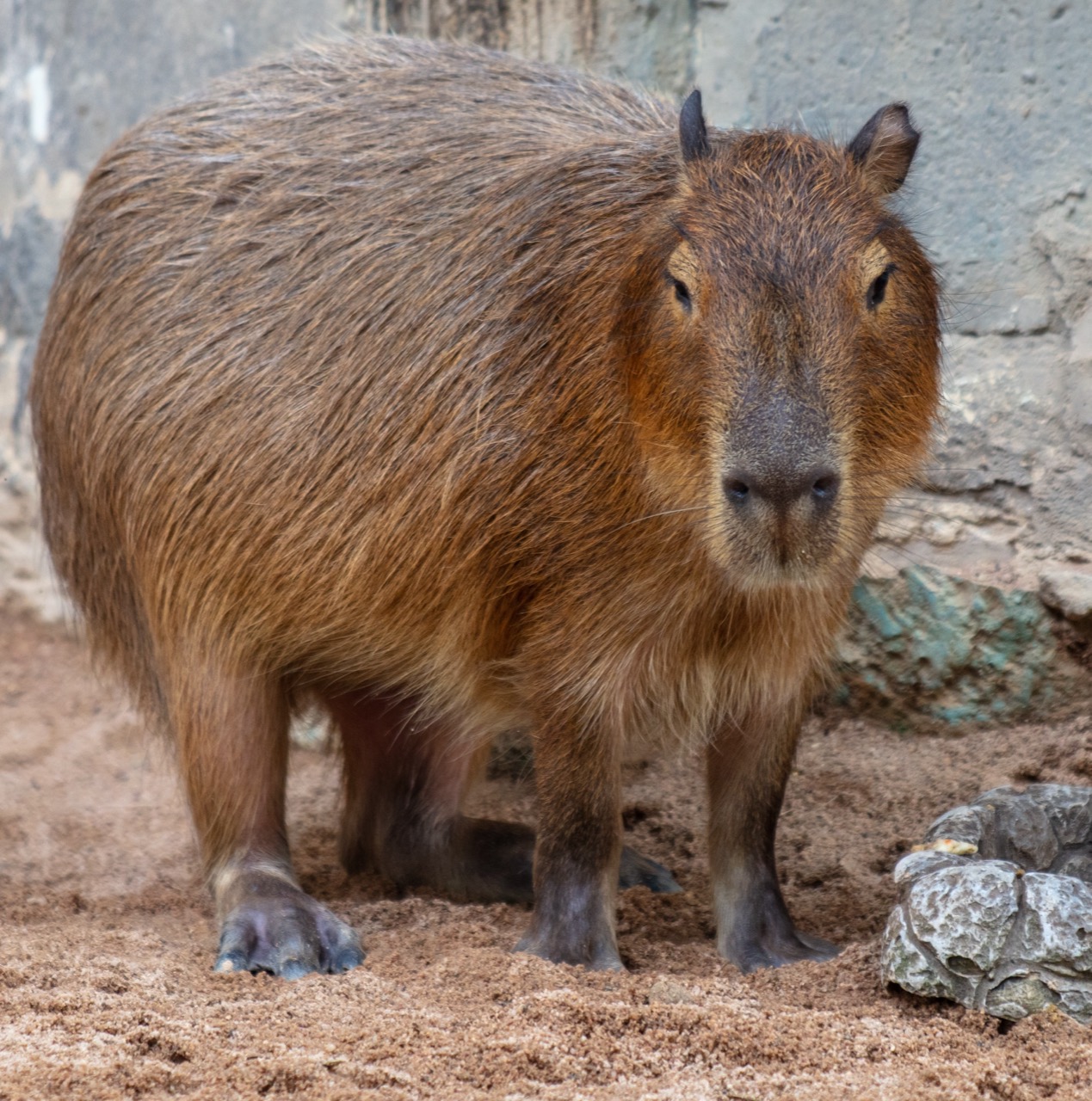
Native to South America, capybaras live in regions where water is never far away. They are found near rivers, lakes, marshes, and flooded grasslands. In fact, water is so important to them that their scientific name, Hydrochoerus hydrochaeris, roughly means water pig. They are the largest rodents on Earth, with adults often weighing as much as a medium sized dog. Despite their size, they are gentle plant eaters that graze on grasses and aquatic plants.
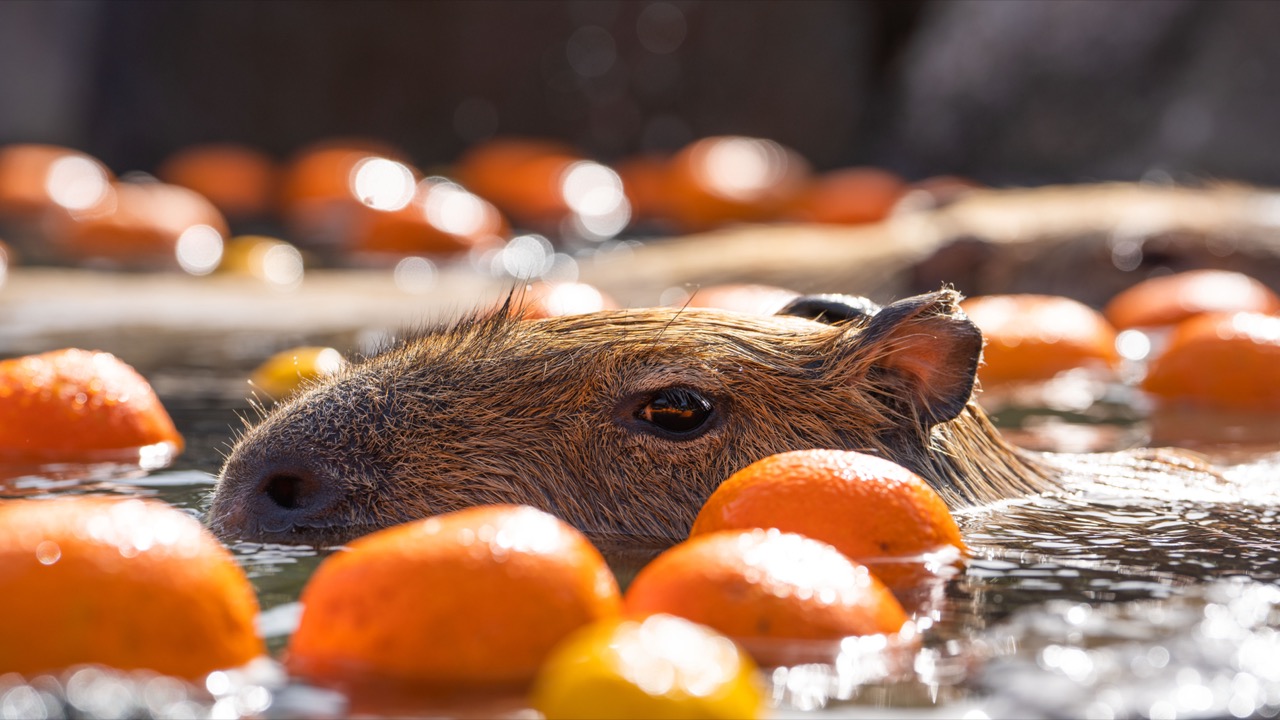
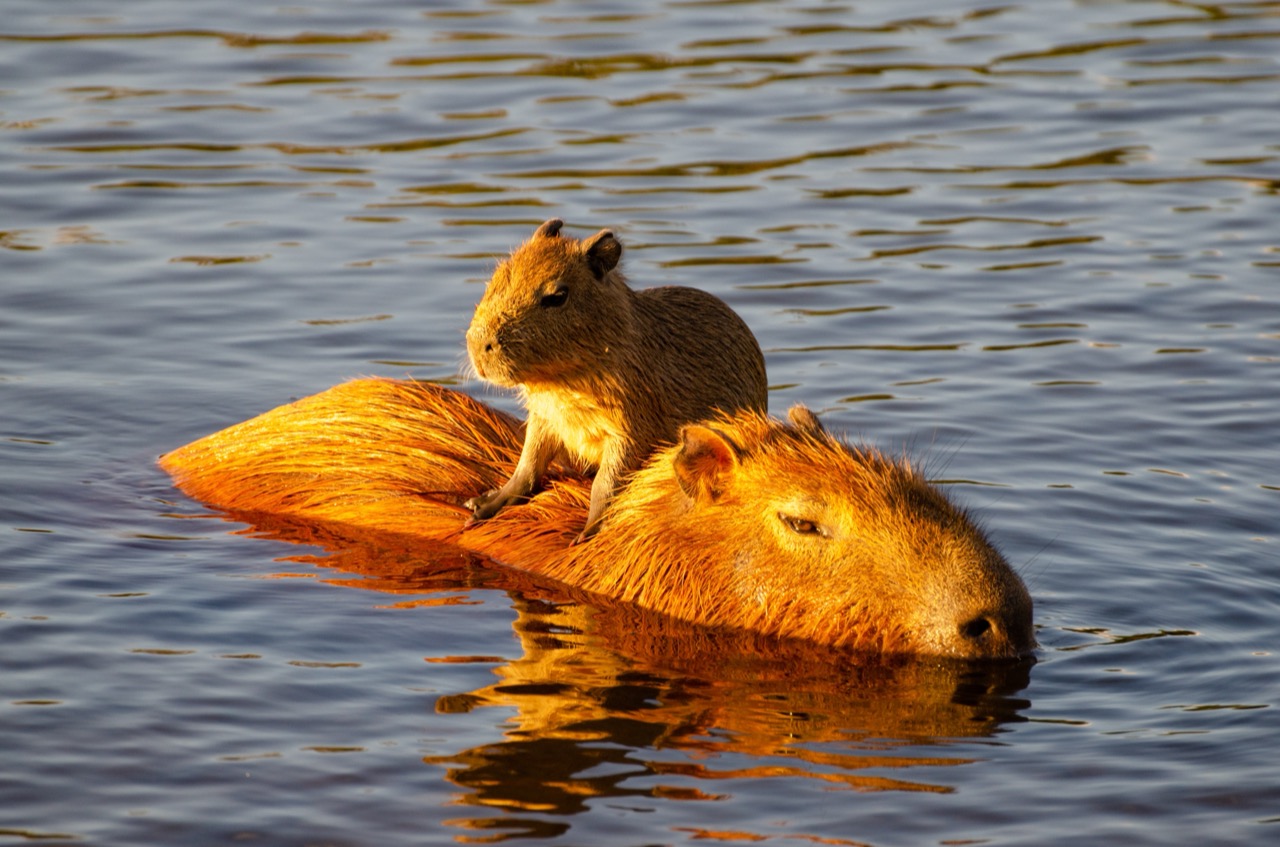
Capybaras are semi aquatic, and this is one of their true superpowers. Their eyes, ears, and nostrils sit high on their heads, allowing them to see, hear, and breathe while most of their body stays underwater. When they need to hide from predators like jaguars, caimans, or large birds of prey, they simply slip into the water and can remain submerged for several minutes. Their webbed feet help them swim smoothly, and their dense, coarse fur dries quickly once they return to land.
These animals are also famous for their calm, almost unbothered attitude. Photos and videos often show capybaras sitting peacefully while birds perch on their backs, monkeys groom them, or even other mammals rest beside them. This relaxed behavior is not just cute; it serves a purpose. By tolerating other animals, capybaras gain extra eyes watching for danger. In return, the birds and smaller creatures may pick off insects or parasites, creating a simple but effective partnership.
Capybaras are highly social and rarely live alone. They form groups that can range from a handful of individuals to several dozen, especially in areas with plenty of food and water. Within these groups, they communicate constantly. They use a mix of soft barks, whistles, clicks, purr like sounds, and even teeth chattering to signal alarm, comfort, or the location of good grazing spots. Young capybaras call to their mothers, and adults reassure each other with gentle vocalizations and close physical contact.
Their daily routine reflects both their need for water and their sensitivity to heat. During the hottest parts of the day, capybaras often rest in the shade or soak in shallow water to stay cool. Early morning and late afternoon are their main feeding times, when they move slowly across open areas to graze. At night, they may continue to feed or rest together in groups, relying on numbers to reduce the risk of predators.
Capybaras also have a specialized way of getting the most from their low nutrient, fibrous diet. Like some other rodents and certain hoofed animals, they practice a form of re eating partially digested food to extract extra nutrients. While this might sound unpleasant to humans, it is a clever adaptation that helps them thrive on tough grasses.
For people who love unusual animal facts, capybaras offer a mix of charm and biological ingenuity. They show how a peaceful, social lifestyle, combined with smart adaptations to water and heat, can create a successful niche in the wild. Learning about them challenges the idea that rodents are small, nervous creatures and reveals instead a calm, cooperative giant perfectly suited to life in the wetlands.