Footnotes to Frontlines History Meets Academia Quiz









Quiz Complete!
From Lecture Halls to Frontlines: How Academic Ideas Shape Historical Turning Points
It is easy to picture history being made in palaces, parliaments, and on battlefields, but many of the ideas that drive those events were first argued over in classrooms, copied in libraries, or tested in laboratories. Universities and scholarly networks have often acted like quiet power stations, generating concepts that later surge into politics, war, and social change. Sometimes the link is direct, as when a professor becomes a policy maker. Other times it is indirect, as when a new way of reading ancient texts or measuring the natural world reshapes what leaders believe is possible.
Medieval universities helped create a shared intellectual infrastructure for Europe. Students and teachers moved between Paris, Bologna, Oxford, and other centers, carrying legal reasoning, theology, and methods of debate. The revival of Roman law in particular did more than fill notebooks. It influenced how rulers justified authority, how bureaucracies recorded decisions, and how states imagined sovereignty. Scholastic argumentation, often caricatured as hair splitting, trained generations to build systematic claims and rebuttals. Those habits later proved useful in diplomacy, administration, and the slow evolution of constitutional thinking.
The Renaissance and Reformation show another kind of crossover: scholarship that becomes a social force. Humanists chasing accurate manuscripts of Greek and Latin texts changed education, but they also changed politics by changing what people thought the past meant. When scholars compared translations, corrected errors, and emphasized original sources, they encouraged readers to challenge inherited authority. The Reformation was not only a religious upheaval; it was also a revolution in information management, powered by print, philology, and the idea that texts could be checked against earlier versions.
In the modern era, scholarship and statecraft became even more intertwined. Many influential political figures were trained as historians, classicists, lawyers, or economists, and they carried those mental toolkits into government. The rise of statistics and social science offered new ways to “see” populations through data, turning censuses and economic indicators into instruments of policy. At the same time, universities became training grounds for civil servants and military officers, linking academic credentials to public authority.
War has repeatedly accelerated this exchange. Mathematics and physics, once pursued for curiosity, became essential to navigation, artillery, and later to codebreaking and nuclear strategy. During the Second World War, teams of scientists and mathematicians helped transform cryptography from a specialist craft into an industrial scale operation, with enormous consequences for intelligence and battlefield decisions. The Cold War strengthened the bond between academia and policy through think tanks and research contracts, where game theory, systems analysis, and area studies influenced how governments imagined deterrence, negotiation, and ideological competition.
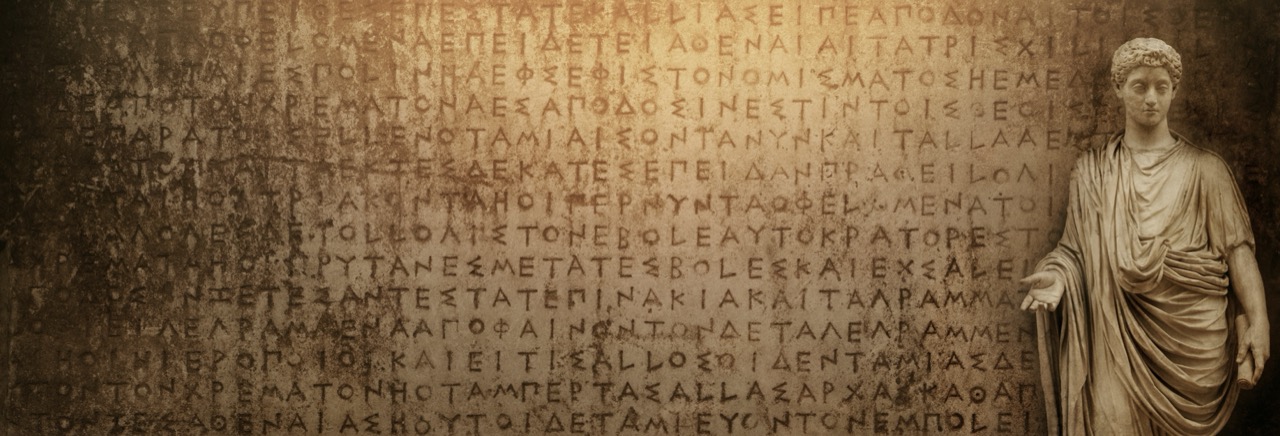
Archaeology and historical scholarship have also had surprising political effects. When excavations or decipherments rewrite timelines, they can reshape national narratives and territorial claims. The ability to read forgotten scripts or date artifacts more accurately does not stay confined to museums; it can alter school curricula, public identity, and international disputes. Even debates that sound purely academic, such as how to interpret a chronicle or classify a language family, can become politically charged when they touch on origins and belonging.
What makes these crossovers so fascinating is that ideas rarely travel unchanged. A theory developed to explain behavior in a seminar might be simplified into a slogan, or a technical model might be treated as a crystal ball. Yet the traffic runs both ways. Political crises push new questions back into universities, funding certain fields, inspiring new methods, and sometimes challenging scholars to defend intellectual independence. The result is a long, lively conversation across centuries, where footnotes can become front page news and where the next historical turning point may already be taking shape in a lecture hall.