Voltage Virtuosos The Hardest Electricity Trivia








Quiz Complete!
Voltage Virtuosos: What Really Happens When Electricity Gets Complicated

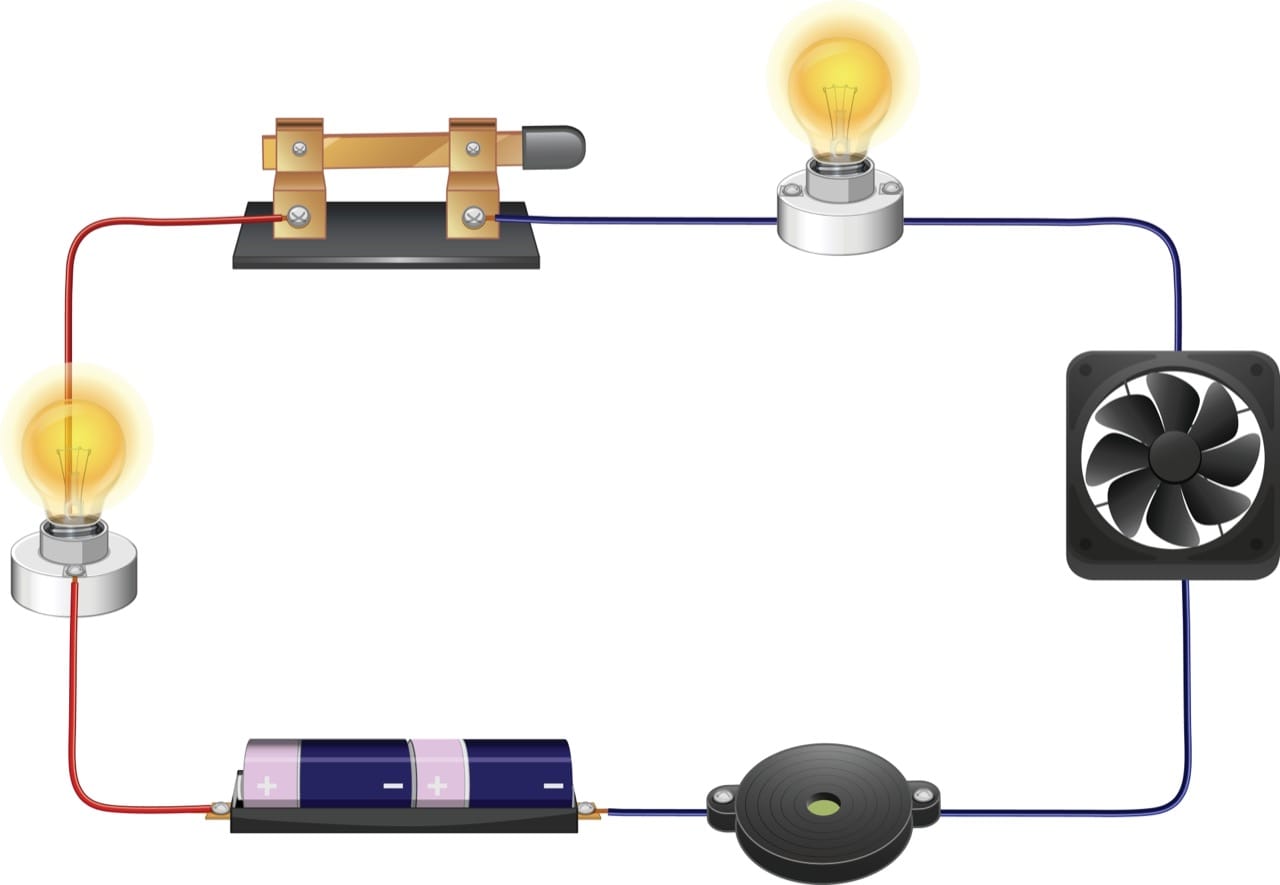
Electricity feels intuitive until you look closely. Flip a switch and a lamp turns on, so it is tempting to imagine little particles of charge sprinting from the power plant to your living room at near light speed. In reality, the charges in a copper wire drift painfully slowly, often fractions of a millimeter per second. The fast part is the electromagnetic field that rearranges itself along the circuit, guiding energy from source to load. That is why a circuit can respond almost immediately even though the electrons themselves barely crawl.
This field-based view becomes clearer when you consider where the energy actually travels. Many people picture energy flowing inside the metal, but a more accurate picture is that energy moves in the space around conductors, described by the Poynting vector, which points in the direction of electromagnetic power flow. In a simple DC circuit, the field outside the wire guides energy into the resistor, where it becomes heat. In AC and high-frequency systems, this idea becomes impossible to ignore: the geometry of conductors and the surrounding dielectric shapes the fields, and therefore shapes the power flow.
Maxwell’s equations sit quietly behind familiar circuit rules. Kirchhoff’s current law works beautifully for most circuits, but it is not a magical law of nature on its own. It is a consequence of charge conservation, and it assumes you are not ignoring important electric field effects. The famous patch that keeps the equations consistent is displacement current, a term that sounds like a technicality until you realize it explains how current can appear to pass through a capacitor even though no charge crosses the dielectric. What flows through the capacitor gap is changing electric field, and that changing field contributes to the magnetic field in exactly the way a conduction current would.
Once you enter AC analysis, phasors simplify the bookkeeping by turning derivatives into multiplications by a factor tied to frequency. But phasors also invite subtle misconceptions. Reactance is not resistance with a different name; it represents energy that sloshes back and forth between fields and components rather than being dissipated. Inductors store energy in magnetic fields, capacitors in electric fields, and in each cycle they can return much of that energy to the source. That is why the sign of reactance matters and why resonant circuits can produce surprisingly large voltages and currents even when the source is modest.
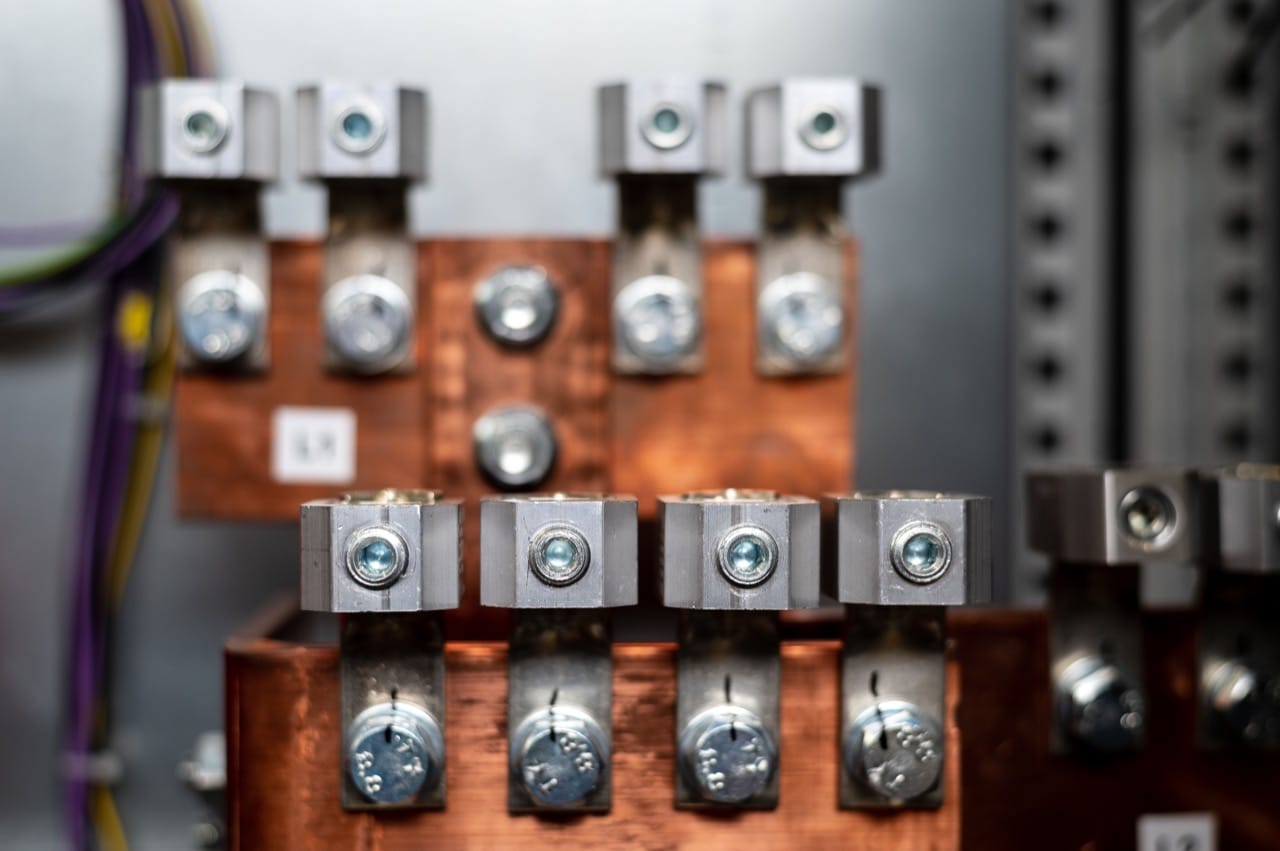
Real conductors add their own twists. At higher frequencies, skin effect pushes current toward the surface of a conductor because changing magnetic fields induce opposing currents deeper inside. The result is a smaller effective cross-sectional area and a higher effective resistance. This is one reason why thick busbars, litz wire, or plated surfaces show up in radio-frequency and power electronics designs. Even at power-grid frequencies, skin effect can matter for large conductors, and proximity effect, caused by nearby conductors, can further distort current distribution.
Measurement is where ideal circuits meet reality. An oscilloscope probe is not a perfect observer; it adds capacitance and inductance that can detune a circuit or create ringing. Ground clips can form loops that pick up magnetic interference or inject noise, and the word ground itself is a frequent trap. Ground can mean a safety connection to earth, a reference node in a circuit, a chassis bond, or a signal return path, and confusing these meanings can lead to hum, measurement errors, or dangerous fault currents.
On the grid scale, the challenge is stability. Alternators must stay synchronized, frequency must be controlled, and reactive power must be managed so voltage stays within limits. Transmission lines are not just resistors; they are distributed systems with inductance and capacitance along their length, which means they can reflect waves and behave differently depending on load and distance. Engineers use power factor correction, flexible AC transmission devices, and careful protection schemes to keep energy flowing reliably. The hardest electricity trivia rewards the habit of asking what is really carrying the energy, what assumptions are being made, and what changes when the frequency, geometry, or scale shifts. When you follow the fields, many “mysteries” become ordinary physics with excellent timing.